7 Strategies for Retailers to Overcome Challenges – Part 1
The last few weeks of the year will show whether retailers will classify 2023 as an acceptable year or a terrible one. German retailers are looking to the future with more skepticism than they have in a long time.
Inflation and uncertain prospects continue to dampen Germans' willingness to spend. The industry itself expects a 4 percent decline in sales in brick-and-mortar retail, and online retail is also growing only marginally. A recovery in consumer confidence is still a long way off.
Retail was one of the first industries to be affected by digital disruption. The first changes became apparent with the emergence of e-commerce in the late 1990s. However, many were unaware of the major changes that lay ahead. Many retailers still do not have a comprehensive strategy, but digital disruption in retail can neither be ignored nor simply waited out. Amazon now has a market share of around 8 percent of the total retail market, making it number 4 after the major food retailers and far ahead of all other retailers.
Prominent losers include Galeria Kaufhof, which will close 47 of its 131 stores. But other players such as Peek&Cloppenburg, real, Hallhuber, and Reno have also had to seek the protection of insolvency in 2023.
The second wave of disruption looming with AI is likely to be significantly stronger. However, many retailers, especially smaller ones, have not even reached wave 1 yet. Over 50% of retailers still do not have an online offering.
However, the boundaries between digital and physical shopping channels are becoming increasingly blurred.
How can retailers ensure that they not only maintain their sales and margins, but also expand them? Here are our recommendations for 2024:
1 Customer-Centric Strategy
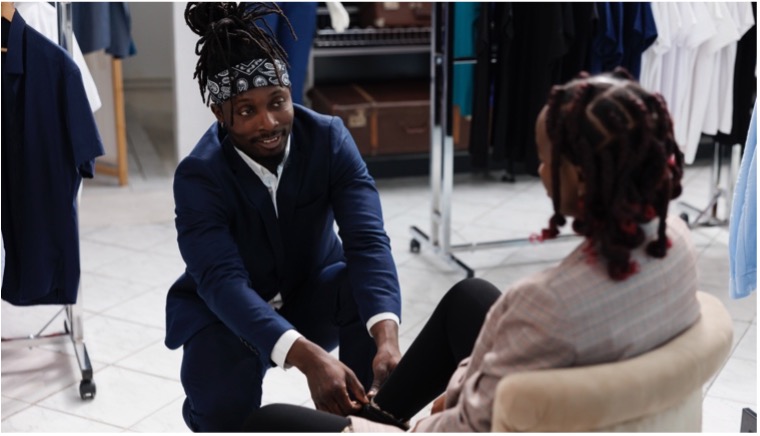
As already discussed in the article “Customer Obsession,” customer-centric companies are more successful and have higher profit margins. Prioritize the customer’s voice above all else in your company.
2. Stay relevant and enable a convenient shopping experience across all channels

The shopping experience is becoming increasingly complex. Due to the rise of digital shopping during the pandemic, people now shop online and in stores in almost equal measure. According to the Salesforce Connected Shopper Report, purchases of products and services via brand and retailer websites and apps, as well as through online marketplaces, have risen by 40% since 2019. New channels such as delivery service apps, social media, and messaging platforms have also grown by more than 20% worldwide. More and more often, consumers are starting their shopping journey outside the physical and digital channels of a brand or retailer—and even completing their purchases there.
Retailers must therefore engage consumers individually across various platforms, such as social media and messaging apps, to provide a convenient shopping experience and cover the entire customer journey. In addition to a suitable omnichannel strategy, this also requires an appropriate content strategy to cover the diverse channels.MediaMarkt has become a benchmark for the successful implementation of an omnichannel strategy. MediaMarkt offers a click-and-collect experience with express and drive-in options, as well as a well-designed in-store experience that has been crafted in line with the omnichannel concept. For example, a separate click-and-collect area in the store is clearly marked, and barcodes are integrated into the sales floor so that a smartphone can serve as a bridge between online and offline. In addition, the retailer’s website serves as the primary information hub for customers throughout their entire customer journey. The specialty retail chain offers high-quality information in the form of product reviews, as well as product availability status both in the online store and in-store, along with customer service that answers questions about the online store and brick-and-mortar locations.
3 Smart Insights Enable Personalization

This brings us to one of my favorite topics, in addition to the topic of loyalty. I think it’s generally agreed that everyone wants to be recognized and addressed as an individual. But unless I’m a regular customer at a store, the shopping experience is anonymous and therefore generic.
Back in the good old days of the corner store, the shopkeeper knew all her customers and could provide them with personalized service. Those days are (unfortunately) over, but despite that, retailers today often have better insights than the corner store owner—yet they don’t make enough use of them.
Even in e-commerce, where customers leave behind plenty of data, this data is often used very little or not at all—whether it’s for personalizing the homepage or, in particular, for taking advantage of the opportunities offered by personalized newsletters or even push notifications.
The technical capabilities have been available for years, but they are underutilized and used in an unsystematic way. Often, the problems start with a lack of consent—that is, consent to the use of personal data. Yet there are very effective ways to obtain this consent, for example, through a preference center. But even when this consent is in place, many retailers shy away from the effort required for personalization. The reasons vary—a lack of in-house expertise, data silos, or a traditional approach to marketing.
Through my projects over the past few years, I've gained many interesting insights that I'd like to share here.
A few years ago, I led an innovation workshop at a well-known automaker. When asked what happens after the contract is signed, the answer was, surprisingly: Nothing! At that time, the wait for a vehicle was sometimes as long as 12 months. This would have been the ideal time to steadily build anticipation for the new vehicle, tease its features, offer events such as city trips or off-road training sessions based on preferences and the model, and then put the spotlight on the day of pickup.
However, at that time, the manufacturer hadn’t coordinated well with the retailer regarding the customer journey, which left gaps and untapped potential. And apparently, they firmly believed in their customers’ brand loyalty—something I wouldn’t bet on, given the period of major change the industry was undergoing.
The opposite comes from the travel industry, specifically a specialist in long-distance travel. The big trip is booked, and anticipation is building. In a special newsletter, the travel provider not only provides information about the destinations on the trip but also highlights optional add-ons and, in particular, essential topics such as visas, passport validity, and medical precautions like vaccinations. Once the newsletter campaign is set up, it can easily be adapted for the entire portfolio.
Another example is a well-known home improvement chain. Like most companies in its industry, the company sent out newsletters with seasonal content. The content was often planned well in advance and not tailored to specific target audiences. By the end of the workshop on personas and customer journeys, we had set up specific campaigns that, in addition to the seasonal aspect, took into account the region and current weather conditions—and weren’t just sent out regularly on a specific day, but rather when the target audience actually needed them. And those needs can vary greatly—whether I live in Munich and need a little grit for the sidewalk and antifreeze for my car, or I’m a farmer in the Alps who suddenly needs a snowblower when half a meter of fresh snow falls.
The system requirements for this are minimal—first-party data in a well-maintained CRM system that is linked to data from the online store, the ERP system, and other systems, along with a modern marketing automation system that offers a wide range of personalization options.
In brick-and-mortar retail, personalized interactions are rare or nonexistent. How could they be, without the necessary data? My wife is a member of numerous club and loyalty programs, and she needs those little plastic cards for exactly one thing—when paying at the register. I’ve never once seen anyone address her by name or ask her how her shopping experience was.
Yet the shopping experience could be wonderfully personalized: When combined with a clienteling solution on a tablet, the customer can be recognized the moment they walk in, allowing for optimal advice. Sales staff receive sales support based on the customer’s preferences and purchase history, but remain free to recommend other products.
For high-traffic stores, this type of solution is less feasible. In these cases, apps and self-service terminals can help and assist shoppers in selecting products.
Next week, we'll continue with our recommendations on the topics of experience centers, customer service, loyalty, and employee training.
Schlagworte